GAIN: How a $76M Specialty Finance Book Runs on AI Infrastructure
The deal-zero case study. A sitting CFO took 80% of his daily work AI-driven, cut operating cost 30%, and grew revenue 100% using the same blueprints strategIQ deploys for clients.

A $76M collections book run with monthly Excel reporting, manual variance commentary, weekend-heavy executive prep, and an FP&A function bottlenecked on data hygiene before any actual analysis could happen. AI tools existed in the company but adoption was sub-30% weekly, and no one was building infrastructure that would compound.
Why this is Case Study Zero
Every other strategIQ engagement traces back to this one. GAIN is the deal-zero. The place the playbook was written, refined, broken, and re-written under live P&L pressure.
The metrics are real. They're also still active. The 30% cost reduction wasn't a one-time event; it's the ongoing operating cadence. The 100% revenue growth is the trailing measure of an AI infrastructure that compounds week over week. The 80% AI-driven daily work is what Saul's calendar actually looks like in any given week. Measured, not aspirational.
When a strategIQ engagement lands at a $25–150M services business, what gets deployed is what runs at GAIN today. Not a slide of how it could work. The actual blueprints, ported.
The starting point
GAIN is a specialty finance company. The product is medical lien funding (capital deployed against active personal-injury cases) with collections happening over multi-year horizons. The book at the start of the AI buildout was meaningfully smaller than $76M, growing fast, and increasingly hard to manage with the existing finance stack.
The pre-AI state of the office of the CFO looked familiar to anyone who's run a PE-backed services rollup:
- Monthly close took weeks, not days. Variance commentary was hand-written every cycle, eating a controller-day each month.
- Executive prep was a weekend job. Sunday nights routinely went to building decks for Monday meetings, pulling data the team should have surfaced the prior Friday.
- Concentration risk was tracked in Excel, with quarterly cadence, which meant any drift in counterparty exposure was a six-week-old fact by the time anyone noticed.
- AI tools existed but adoption was sub-30%. Licenses sat unused. The team was busy. No one had time to figure out what a skill, an agent, or a CLAUDE.md scaffold would do for them.
- Operating costs were rising faster than the team wanted them to, and the headcount lever felt like the only one available.
This is not a "we transformed" story. This is the inventory of pain Saul walked into as the CFO. The transformation is what came next.
The four blueprints
The strategIQ pillars (Training, Agents, Tools) didn't exist as a taxonomy when this work started. They emerged backwards. They're the categories that describe what was actually built. Four blueprints carry most of the weight.
Blueprint 1: Close compression
What got built: a month-end readiness agent that runs in the background from day -3 of close. It pulls trial balance status, flags missing entries, surfaces variance candidates against budget, drafts the first pass of close commentary, and files the artifacts where the team can pick them up.
The result wasn't faster close because the team got faster. The result was the team starting close with 60% of the work already done. The closing-day cadence shifted from "find the variances" to "validate the agent's pre-flight." Same controller-day spend, dramatically more output.
This blueprint is now in the strategIQ Agent library as the Month-End Readiness Agent. It's the most-deployed agent across engagements.
Blueprint 2: Variance commentary writer
What got built: a tool that takes the closed P&L, the budget, the prior period, and a structured input pack of "what happened this month," and drafts variance commentary in the company's voice, formatted for the board pack.
The CFO commentary used to be a two-day write. Now it's a 30-minute review. The voice is the CFO's, because the model was tuned against historical commentary from the same desk. The board doesn't notice the difference because there isn't one to notice.
This is now in the strategIQ Tools catalog as the Variance Pack Generator.
Blueprint 3: FP&A leverage
What got built: a CLAUDE.md scaffold for the FP&A team, a prompt-pattern library by function, and an office-hours cadence the team uses for the long tail of "how do I get Claude to do X."
The training pillar is what made the agents and tools land. The team uses Claude reflexively for variance investigation, scenario modeling, board narrative drafting, and analyst-level data exploration. The result: the FP&A function does meaningfully more strategic work without a headcount add. The headcount lever stays available, but it's used to add capability, not absorb drag.
The fluency wins compound. Every workflow the team migrates to AI-as-default becomes a teaching artifact for the next workflow.
Blueprint 4: Buyer-outreach digest
What got built: a daily agent that surfaces warm-intro pipeline activity, flags follow-up windows, and drafts the next-touch email for the CEO and Saul to review and send. The agent runs every morning. The pipeline doesn't go cold because someone forgot to circle back.
This is now in the strategIQ Agent library as the Buyer-Outreach Digest, deployed where business development is part of the CFO's scope (common at the smaller end of the ICP band).
What this stack actually looks like
Behind the four blueprints sits a stack that strategIQ replicates client-side at engagement kickoff:
- Claude Code as the day-to-day surface. Saul's terminal and the team's. Skills, slash commands, CLAUDE.md files, and a project memory layer that captures every recurring pattern.
- Vercel + Neon for the apps. When a tool needs to be a deployed app (dashboard, internal UI, scheduled cron), it ships on Vercel with Neon Postgres behind it. Same stack the strategIQ website runs on.
- Custom MCP servers. Where Claude needs to talk to a system (Salesforce, internal databases, the email layer), the connection is an MCP server, not a brittle integration.
- Cherokee Salesforce as the source of operational truth. The collections book lives there. Every agent reads from it.
- An ever-growing skill library that any team member can call. New skills get added by Saul or by an analyst with three months of fluency under their belt.
This stack is portable. The reason a strategIQ engagement can ship a running agent fast is because the stack already works. The work is "configure this for your data and your workflow," not "design from scratch."
The economics
The headline metrics (30% operating cost reduction, 100% revenue growth, 80% AI-driven daily work) are the trailing measures. The operating mechanics underneath:
- Closer cycle time dropped meaningfully. The team closes with the same number of people on a tighter calendar.
- Variance commentary went from two-day write to 30-minute review. That's a controller-week of capacity recovered every quarter.
- Concentration risk became a daily heat-map instead of a quarterly Excel pull.
- Sunday-night CFO prep mostly stopped. Weekend Prep Agent + Daily Summary Agent handle the inputs, Saul reviews on Monday morning, the meetings happen.
- Headcount stayed flat through 100% revenue growth. The infrastructure absorbed the volume.
The revenue side compounded for separate reasons. Better data discipline means the credit team can underwrite faster. The buyer-outreach digest means more warm intros convert. Faster close means investors get cleaner numbers and the funding stack tightens. The AI infrastructure isn't the only reason for the growth, but it's the operating-leverage layer that made the growth absorbable.
What ports to your team (and what doesn't)
Two honest notes.
What ports. The four blueprints in this case study (close compression, variance writer, FP&A leverage, buyer-outreach digest) ship as drop-ins. The stack underneath (Claude Code, Vercel, Neon, MCP servers) is portable. The training motion (CLAUDE.md scaffolds, prompt-pattern libraries, office hours) is identical across services-rollup ICPs.
What doesn't. GAIN is a specialty finance company, which has specific reporting and risk-management primitives that aren't relevant if you're a healthcare MSO, a business services rollup, or a deal-services PE workflow firm. The blueprints carry; the chart-of-accounts taxonomy and the source-system specifics don't. Every engagement starts with a workflow audit because the blueprints have to be customized to the actual workflows in front of you.
The connection to your engagement
If you're a CFO or controller at a $25–150M PE-backed services business, the GAIN case study is the proof that the strategIQ playbook works under real P&L pressure, with real controllers, real auditors, real PE sponsors, and real board cycles. Not a sandbox.
The engagement is built so you can verify this for your own team, with one of the four blueprints (or a custom one) running in your environment. If it doesn't work, you keep what got built and walk away. If it does, the retainer continues.
Explore the capabilities → Book the discovery call →
Notes for Saul (review-only: strip before publish)
- Confirm the $76M figure as the public number. If the externally-quoteable book size is different, swap. The strategy doc uses $76M as the load-bearing public proof point.
- Confirm the 30% / 100% / 80% headline metrics are still safe to publish as of the case-study go-live date. They're consistent with strategy.md §6 and §10, last refreshed 2026-04-25.
- The four blueprints are pulled from strategy.md §7.6. Confirm the buyer-outreach digest is OK to publish as a GAIN-derived asset, the strategy doc lists it as "already exists in GAIN context, productize for strategIQ retainer use."
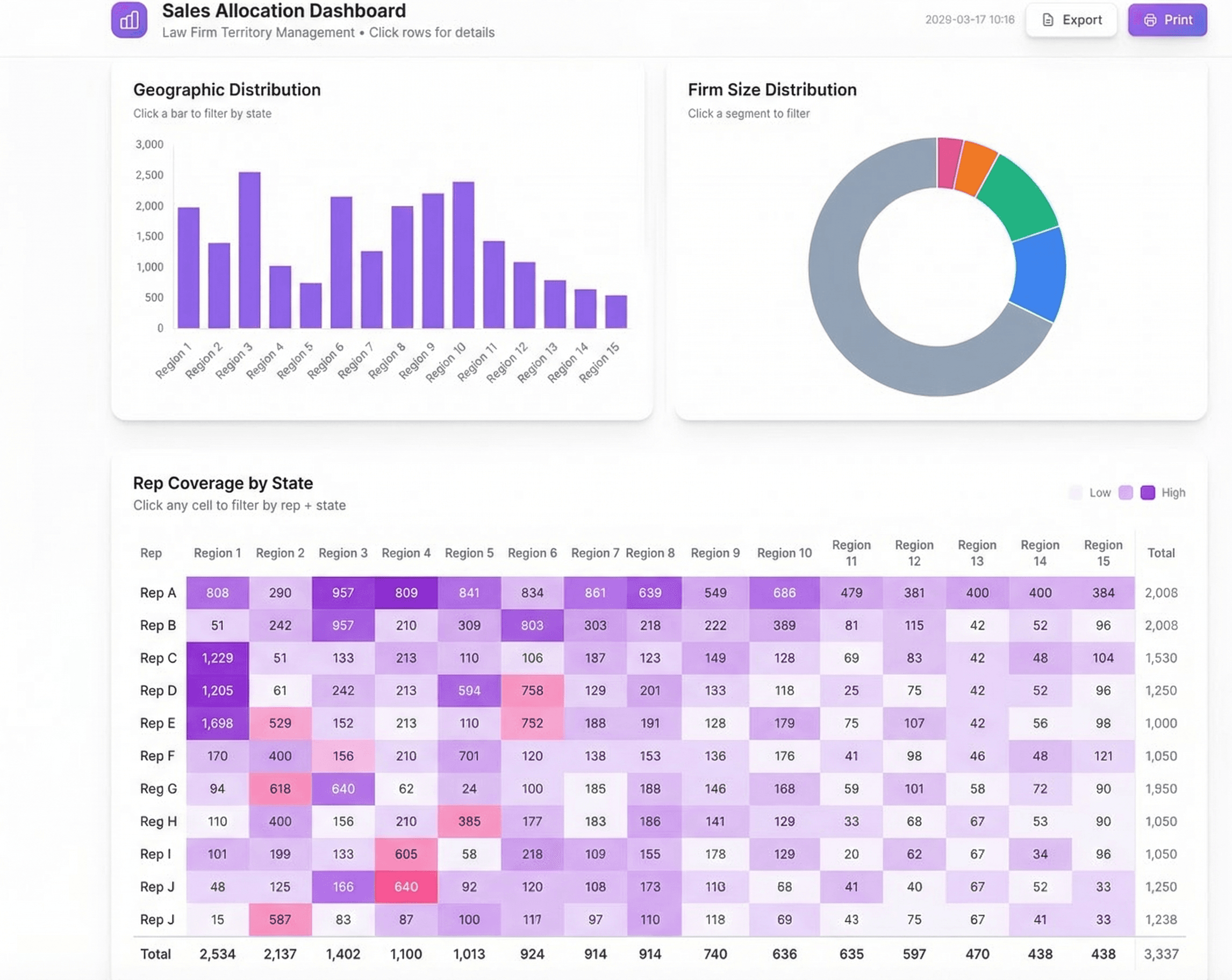
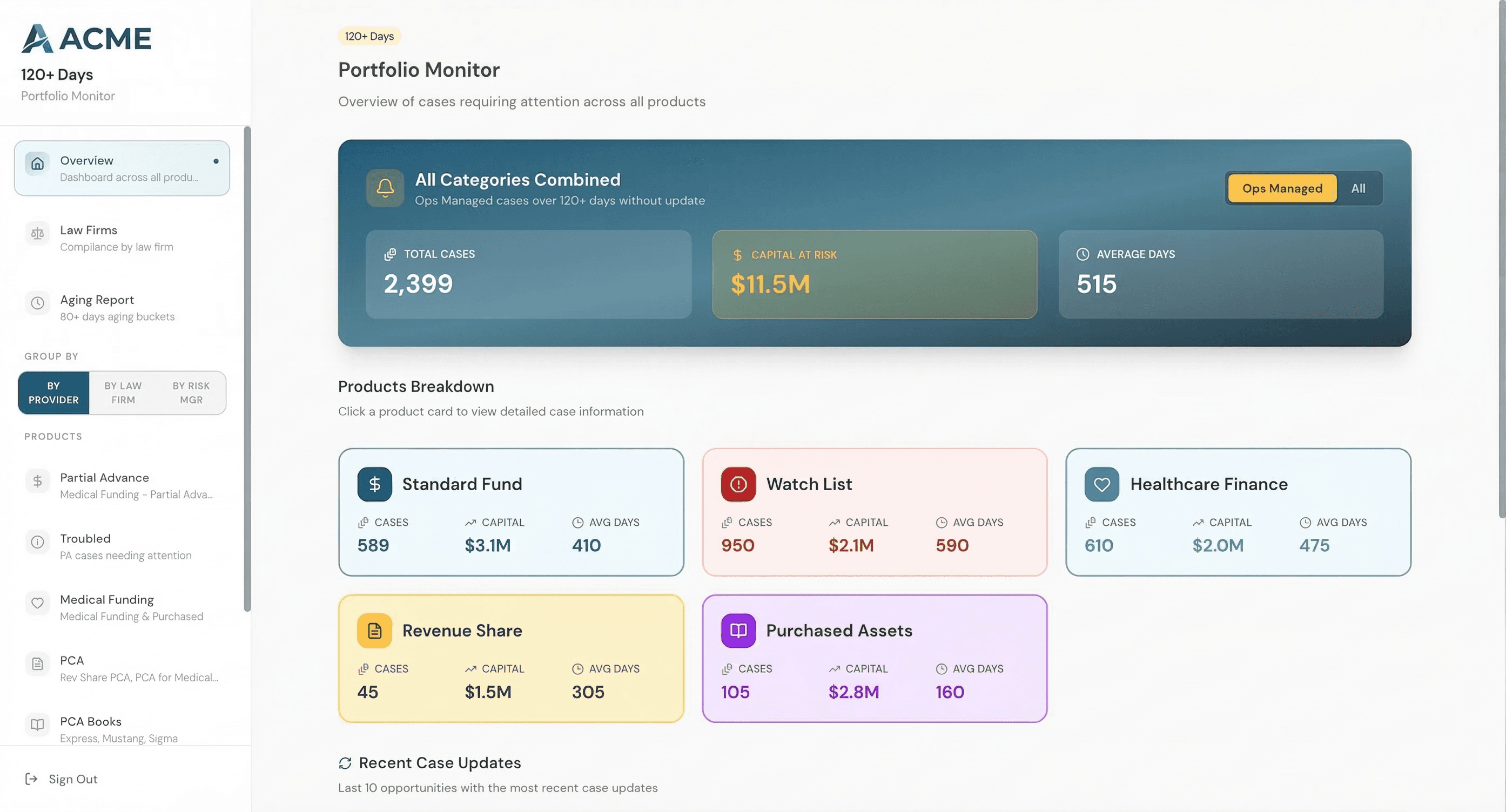
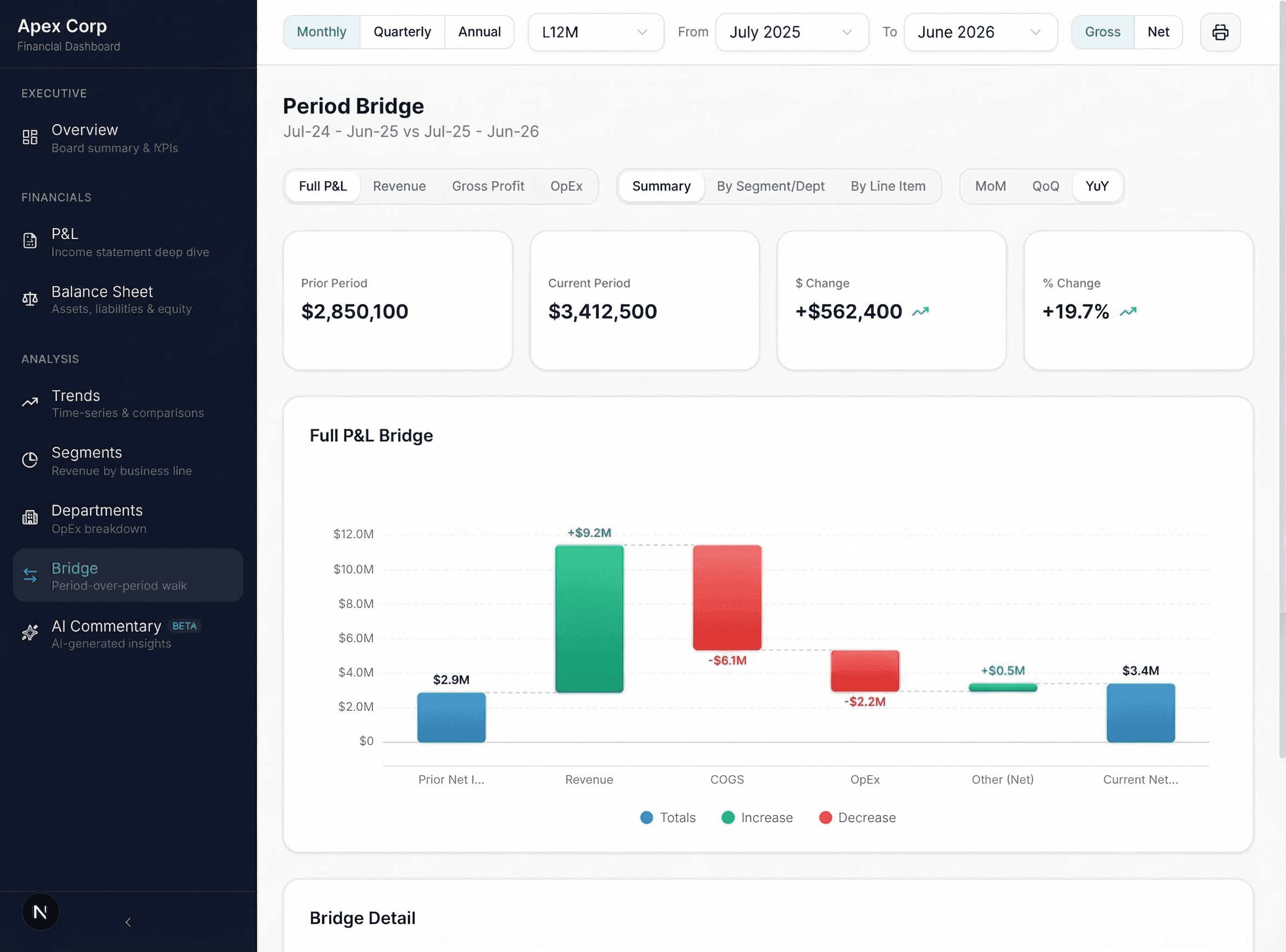
- Add screenshots before publish. Suggest: case monitor dashboard, financial executive summary, sales/funding analytics. Anonymized versions exist at
/Marketing/Case_studies/anonymized_v2/. Add toscreenshots:frontmatter array. - Optional Phase 2 add: a short Saul-attributed pull quote near the metrics strip. Something like "When the playbook works under live P&L pressure, you stop pitching slides." Saul to write, first-person, short, no marketing-speak.
Need something like this built?
I build custom dashboards and analytics tools for finance teams. Let's talk about what you're working with.
Book a 30-Minute Conversationor email us at hello@strategiq.so